Read original article at www.michigandaily.com.
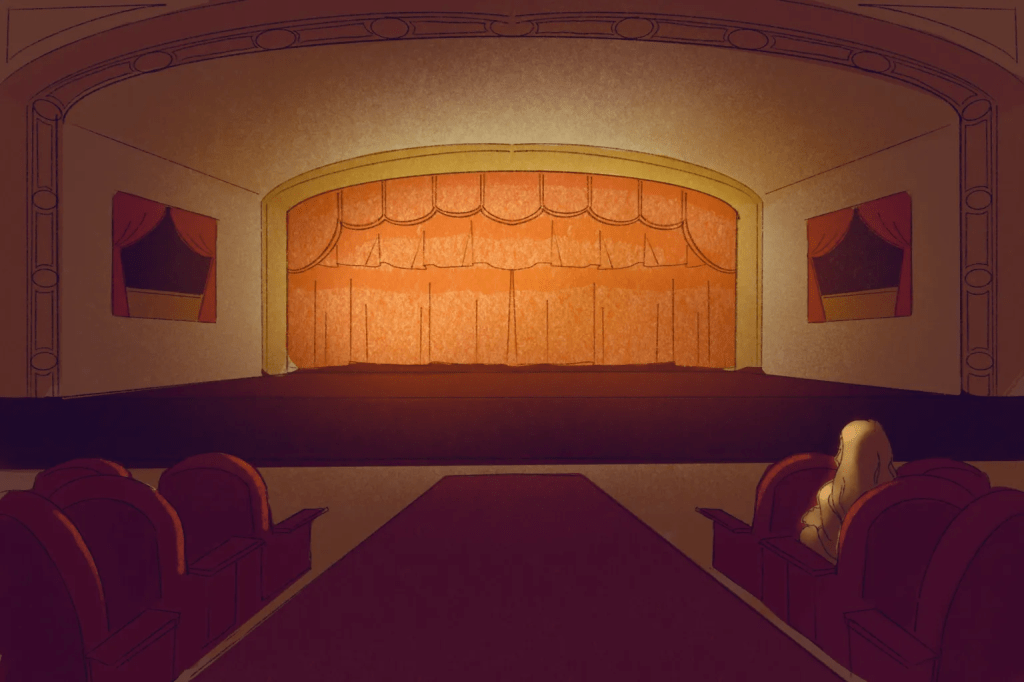
November has been a difficult month. In the weeks leading up to the election, I’d been working with the Vote for Equality campaign, a feminist PAC that worked to mobilize the student voting population in swing states and advocate for voting blue up and down the ballot. Since early September, I’d given myself wholly over to the campaign, pushing the limits of my schedule and finding myself physically and emotionally spent by Nov. 5. I’m still exhausted.
By the end of Election Day, as we waited outside of the Michigan Union for the polls to close, serenaded by a mariachi band, we realized that our job was done. There were no lines trailing underneath the Hatcher Graduate Library from the University of Michigan Museum of Art like there had been in the 2022 midterm elections. No ballot boxes had been set on fire. Almost every person we talked to that day told us they’d already voted. There was nothing more for us to do. I went home, took a long shower and then settled in for an anxious night of refreshing the results as they came in. When I went to bed, things were looking grim, but not entirely unhopeful.
By morning, of course, the presidential race had been called: Donald Trump had won. While Nov. 5 had been hard for a variety of reasons, Nov. 6 was even harder. There was, and continues to be, a lot to be upset about. I was worried about everything a Trump presidency and the effects of Project 2025 could mean — from threats to free speech in public libraries and schools, to legislation that hinders access to reproductive health care to mass deportations. I was angry with Kamala Harris and the Democratic Party for neglecting to take a firmer stance condemning the United States’ ongoing complacency surrounding the genocide in Palestine. I was frustrated that I had to consider my vote as going toward the lesser of two evils — that I couldn’t vote for a candidate I supported enthusiastically, but rather for a candidate who was, at the very least, better than Trump. I was devastated that after months of campaigning while reckoning with emotional and moral conflictions, the blue shift never came — not in Michigan or in any of the other swing states.
Even before the election results were announced, I had started to think about what I would do if Trump won — where I would volunteer and how I could help support my friends from red states. I figured I’d want to approach it pragmatically and make a to-do list, like I tend to do in the face of most problems.
But the void that opened up inside me on Wednesday morning was wider than I could’ve imagined.
All of a sudden, for the first time in months, I have more than 20 hours per week back to myself, and it’s given me a lot of time to think — for better or for worse. Though there were local Democratic victories in the U.S. House of Representatives and Senate, I’ve been feeling lost in the wake of a fruitless presidential election campaign. As the week came to a close, I began to understand that I needed a distraction, or maybe just something that could pull me out of this funk and remind me that my values were still worth fighting for.
On Nov. 8, still reeling from the days before, I put on some lipstick and a black dress that I stole from my mom and went to go see the Pioneer High School Theatre Guild’s production of “Newsies.” The musical — one that is deeply sentimental and important to me — was everything I could’ve asked for and more. “Newsies” was introduced to me first as a 10 year old in the local children’s choir and then resurfaced in my senior year of high school when one of my best friends suggested we watch the Disney musical version while sick with suspected sun poisoning during our spring break trip to Florida. Then and now, I remained enamored from “Santa Fe,” the opening number, until the curtains dropped, awestruck as the actors leapt gracefully across the stage and then dove into song after iconic song without missing a beat. As the newsies came running through the aisles bearing tea lights, I was on the edge of my seat, clapping wildly. During “Seize the Day,” goosebumps ran up and down my arms. It was such a flawlessly executed show featuring such strong vocal talent that I almost couldn’t believe the cast was made up of high schoolers.
As Act 1 went on, and then Act 2, I found myself lost in thought. Just when I began to think that the worst of the week had passed, I realized I couldn’t stop thinking about the election. It was emotional, if not cathartic, to be experiencing “Newsies” and post-election disappointment at the same time. Beyond the sheer entertainment factor that would have gripped me regardless of Tuesday’s outcome, being in a high school auditorium to watch this particular show felt so incredibly timely and important.
“Newsies” is a show set in turn-of-the-century New York City about a group of young newsboys, affectionately called newsies, who form a union and go on strike in the wake of unfair working conditions set by the crooked oligarchs of the newspaper publishing industry (including the infamous Joseph Pulitzer). Based on the true story of the newsboy strike of 1899, it’s a musical that celebrates the power of protest and the power of youth — those with little tangible power in American society — to make their voices heard and demand change. Notably, the newsies didn’t take down Pulitzer — he still went on to have a prolific career as an infamous titan of the newspaper industry. But what they did do was successfully stand up for the rights of working children at the time, given that they still needed to make a living for themselves or their families and learn to continue existing and working under Pulitzer’s regime.
While my group campaigned, people would often come up to us and say, “It has to be Kamala.” I believed that, too — not wanting to imagine the alternative could truly be possible. But here we are. Ideals like the ones that drove me to campaign in this election, and the ones that make me wish a candidate more progressive than Harris could ever become president, will always be something I think we should strive for and work toward, but progress on a radical scale happens slowly. It’s a difficult pill to swallow, but I still know that we need to learn how to make things work under a less than ideal system in the meantime. The reality of the next four years is that Trump will be the president of the United States. The time has passed for wishing it could’ve been somebody else. Now, it is time for us to start thinking about how we will band together — on local, state, national and international scales — to make life in Trump’s America as bearable as possible for everyone.
I wish I had some magical line to offer that would ease the suffering much of our country is feeling right now, but I don’t. What I can do, though, is share this reminder of what art can do for a community. In its many forms, art offers a space for people to be together and heal in the wake of difficult circumstances. It has the capacity to hold the total sum of possible human emotions and express them in ways that can resonate on individual and communal levels simultaneously. Art can reflect not only the tangible realities of past and present history, but also the intangible cruxes of life — love, inspiration, empathy, patience, kindness. It is liberating in the way it encourages and facilitates deep thought and expression.
Art will always sustain, even in the most oppressive and difficult of times. In the 1980s, artists like Keith Haring used their work to help redefine public perception of the AIDS epidemic. More recently, the Black Lives Matter movement has encompassed murals and other forms of street art as expressions of unity and solidarity with the Black community.
For some Palestinians, too, poetry has become “compensation for their lack of physical power,” as Atef Alshaer, senior lecturer in Arabic language and culture at the University of Westminster, said in a 2024 interview with Time Magazine.
We need to be turning to art not only as a form of comfort or escape, but as a conduit for activism. In this way, I found “Newsies” to be a reminder, however trite, of what activism looks like when it works. I needed to see this if only to remember that the road to equality in this country is a long one, and that however significant an election might be, it’s still not what the entire future of the U.S. will fully hinge on. And while there will be space now and later to pursue tangible forms of all-out activism, what the creation and consumption of art offers in the meantime is a community-engaged space that walks the line between action and grief when we can’t lean fully into one or the other.
I don’t want to flatten the outcome of this election and the process of grieving it with tone-deaf optimism. There is much to despise about American government and politics that is separate from Trump and the Republican Party, but still I cannot help but see him as a symbol of ideology that is hateful and wrong and worst of all, utterly pervasive in day to day American life. I’m also not trying to say that “Newsies” is an all-revealing metaphor for the modern political scene. But what I am trying to say is that amid the time and space we take to grieve, we must prepare for the fact that time marches on and come Jan. 20, Trump will be president again. There’s no reason to spend the next four years or even another week grieving what could’ve been. Pardon my cliche, but now is quite literally the time to “seize the day.” Letting art blend the truth of reality with imaginative possibilities for the future, or even just watching “Newsies” on a Friday night with your friends, might just be the best place to start.
Statement Columnist Katie Lynch can be reached at katiely@umich.edu.
 Pioneer High School Theatre Guild